



At first glance, it may seem unlikely that the publication of a novel in the early nineteenth century could play a significant role in shaping ideas about artificial intelligence or technologies such as ChatGPT. Yet Frankenstein; or, The Modern Prometheus, Mary Shelley’s enduring masterpiece, is not merely a literary work but a foundational text in the history of human thought about artificial intelligence.
To understand this—and the profound influence the novel has had on world cinema and television—we must travel back from the twenty-first century to the summer of 1816, to a villa by Lake Geneva. It was there that Mary Shelley first conceived the idea of a man-made being. At a time when electricity was scarcely understood and machine computation did not exist, her imagination produced a story that remains strikingly relevant two centuries later, in the age of artificial intelligence and self-learning machines.
Frankenstein soon became a major source of inspiration for cinema and television. To date, more than twenty feature films and at least five television miniseries inspired by Frankenstein have been produced, spanning genres such as crime, noir, mystery, horror, and modern reinterpretations. The most recent major adaptation is Frankenstein, directed by Guillermo del Toro, scheduled for release in 2025. This project represents a long-cherished ambition for del Toro and offers a broad re-reading of Shelley’s novel. Unlike many earlier adaptations, this version focuses more on the human and philosophical dimensions of the story than on horror alone. As a result, the film has been widely praised by critics. Writing on RogerEbert.com, the film was described as a “breathtaking triumph,” noting that del Toro has transformed a familiar story into something fresh and richly textured—both terrifying and deeply moving.

Del Toro’s Frankenstein is a profound meditation on humanity, loneliness, and fate: on how a creator abandons his creation, leaving it to wander the world in a weary, fragmented body assembled from the remains of men killed in war, carrying within it an accumulation of suffering. From this perspective, the film is deeply admirable. Moreover, the two central performances—Oscar Isaac as Victor Frankenstein and Jacob Elordi as the Creature—stand out as memorable and powerful.
At its core, Frankenstein confronts us with a series of ethical questions that remain strikingly relevant today.
The novel’s central question is this: what are the ethical, human, and social consequences of creating an artificial being? This question has now become fundamental to contemporary debates on artificial intelligence. While Mary Shelley played no technical role in the development of AI, her cultural and ethical influence is so profound that many scholars regard her as a pioneer of the intellectual foundations of this technology. At first glance, Victor Frankenstein’s stitched-together creature bears little resemblance to algorithms or neural networks. Yet a closer examination of the narrative structure reveals that the Creature represents an early conception of an “autonomous system”—a creation that escapes its maker’s control and develops capacities beyond his anticipation.
This same fear underlies today’s anxieties about AI: What happens if a machine makes decisions its creator did not foresee? What if artificial intelligence surpasses human intelligence—or causes harm? Frankenstein anticipated these concerns long before they entered scientific discourse.
Shelley’s Creature is a learning being. He observes, accumulates experience, and develops understanding—yet he is denied guidance, education, and ethical nurturing. This mirrors one of the central challenges in AI today: the problem of data, training, and moral alignment. Contemporary AI ethics repeatedly emphasize that danger does not lie in technology itself, but in flawed data, poor training, and the absence of accountability among its designers.
At its heart, Frankenstein is a critique of scientific irresponsibility. Victor creates his being and then abandons it, and this abdication of responsibility becomes the root of catastrophe. The same question resonates today with renewed urgency: Who is responsible for the consequences of a self-learning system—the designer, the company that deploys it, the regulator, or the user?
One of the novel’s deepest layers addresses consciousness, identity, and the right to exist. The Creature possesses not only a body but also awareness and emotion, and he asks: Who am I, and why was I created? These questions are echoed today in debates about artificial intelligence. Can a machine attain self-awareness? If it reaches a level of consciousness and causes harm, would it deserve rights?
The Creature’s famous line—“If I had been loved, I would have been virtuous”—is now often invoked as an ethical metaphor in AI discourse: technology without human care and moral frameworks can become a threat. The influence of Shelley’s narrative runs so deep that terms such as “the Frankenstein syndrome” and “fear of the creation” have entered the vocabulary of technology ethics. Mary Shelley’s name has even appeared in official European Union documents addressing the risks of artificial intelligence.
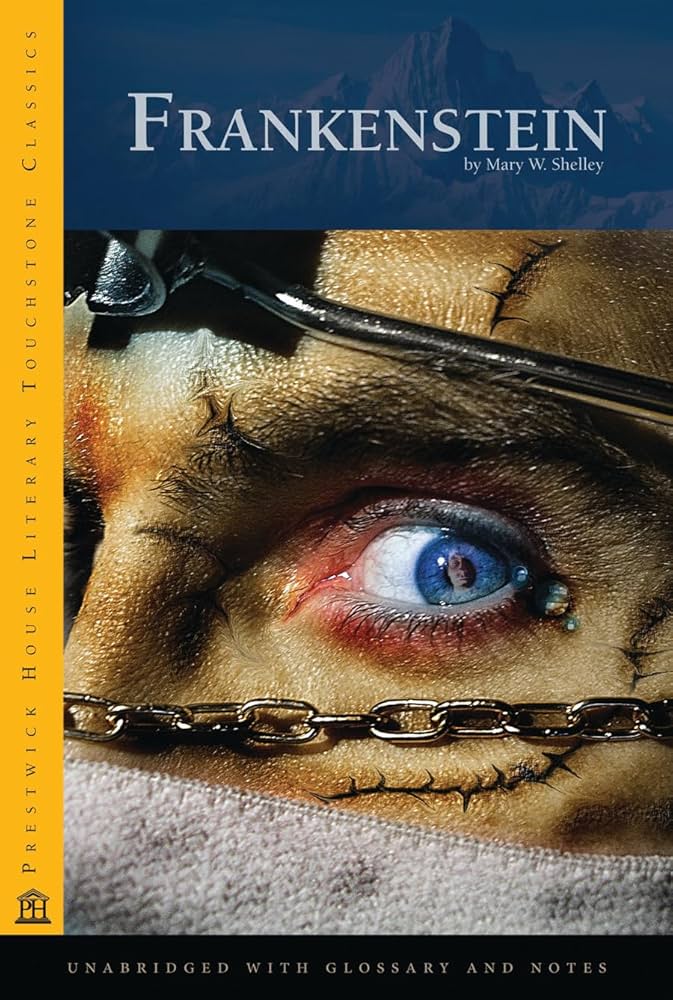
From the emergence of robots in science fiction in the 1920s, to the formal birth of artificial intelligence in the 1950s, and finally to the 2020s—with large language models and humanoid robots entering everyday life—the fundamental questions remain the same ones Mary Shelley posed two centuries ago.
Mary Shelley was neither a scientist nor an inventor, yet she laid the cultural and ethical foundations for humanity’s encounter with artificial intelligence. She is not the mother of AI—but she can rightly be called the mother of the ethical imagination of artificial intelligence.
At a time when AI plays a more pervasive role in human life than ever before, returning to Frankenstein means returning to the roots of our deepest concerns: that creation without responsibility leads to disaster; that the creator is always accountable for the creation; and that power without ethics and empathy leads only to ruin. And yet, one essential question remains unanswered: ultimately, which institution—or authority—is meant to take responsibility for humanity’s intelligent creations?
