



In 2021, as the Taliban gradually seized Afghan cities one after another, they ultimately took control of Kabul and, after twenty-one years, regained power in the country. While Afghanistan’s political and social order was collapsing, some Afghans resisted selflessly and, amid the widespread chaos and turmoil, refused to abandon their homeland until the very last moments. Nevertheless, the people of Afghanistan—especially women—knew all too well what bitter fate awaited them.

Four years after the fall of Afghanistan, France produced a miniseries titled Kabul. In this review, I examine how the series represents the crisis. Classified as a political drama, the show is less concerned with abstract political analysis than with human-centered storytelling. The idea for Kabul originated from the personal experience of French producer Fabien Servan-Schreiber. In the summer of 2021, while vacationing in Greece with his son, he became aware of the crisis in Kabul and the difficulties Afghan artists and doctors faced in evacuating the country. He actively became involved in rescue operations. His efforts initially began with fundraising to purchase plane tickets and quickly expanded through direct contact with French, British, American, and Qatari officials—an initiative that ultimately helped save hundreds of people from Taliban rule. This personal experience became the narrative inspiration for the series.
With a budget of approximately $20 million, France entrusted the production of this six-episode miniseries to two Polish female directors, Kasia Adamik and Olga Chajdas, and to two prominent French screenwriters, Olivier Demangel and Thomas Finkielkraut.
This high-tension political thriller managed to attract international audiences while also serving as a wake-up call to the collective conscience regarding the fate of the Afghan people—particularly women, some of whom were forced to flee while others chose to stay. Kabul is, in effect, a bold work for viewers interested in contemporary political developments but who prefer to witness such events through the lived experiences of people caught in crisis, rather than solely through the perspectives of diplomats and policymakers.
Although the central storyline revolves around a family’s desperate attempt to escape—including a mother who is a prosecutor and a daughter who is a doctor—the series is rich with parallel narratives. Critics have described the show as partially realistic, yet many argue that Kabul offers a simplified portrayal of a crisis that has profoundly transformed Afghan society and that it falls short in conveying the true emotional reality of Afghan women.
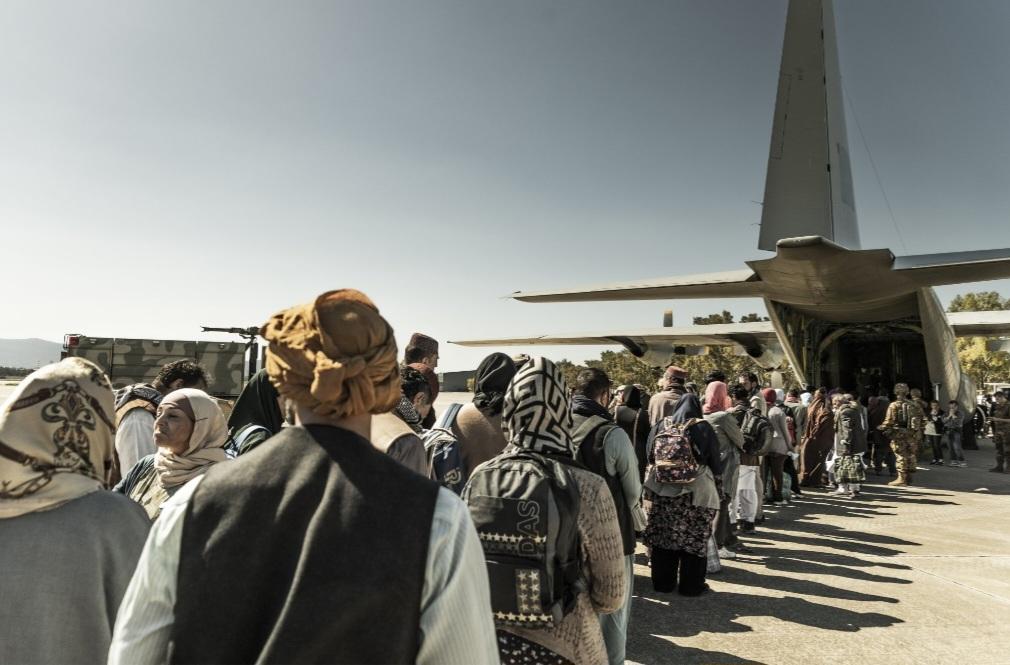
In Afghan diaspora media, one of the main criticisms directed at such productions is that films or television series about Afghanistan made by non-Afghan countries often suffer from the problem of “external representation.” That is, rather than emerging from within Afghan society, these narratives tend to prioritize crisis-driven dramatization over lived cultural authenticity. In this context, the limited involvement of Afghan filmmakers and experts in the production process results in cultural details, emotional textures, speech patterns, and the inner reactions of characters appearing less convincing.
The miniseries attempts to portray three narratives simultaneously: the human tragedy of Afghan families, Western strategic failures during two decades of military presence, and a critique of post-colonial perspectives on Afghanistan. Among the strengths of Kabul is its carefully crafted atmosphere; the reconstruction of Kabul’s locations in Greece and the use of an abandoned airport in Athens for aviation scenes stand out as notable technical achievements. Nevertheless, for many viewers, the most humane and impactful aspect of the series remains its portrayal of Afghan women—their choices between staying and fleeing, their forms of resistance, and the social consequences of those decisions.
