



Austin-based writer/director/graphic designer Yen Tan’s fifth feature film, All That We Love, begins poetically with the sound of bird songs over the opening credits on a dark screen followed by shots of a tiny bell ringing in a breeze, framed photos of people and a dog, and shots of a dog’s bed, food bowl, and water bowl. After we are shown a small ball on the floor, we hear the voice of a woman singing “Go get your ball,” and finally see that woman cradling a large dog and telling him, “You can go. It’s OK. Mommy’s here and I’ll be OK.”
Yen Tan unhesitatingly opens his film on a sad note revealing its central themes of death, departure, loss, and letting go, all succinctly encapsulated in a montage of shots. During a 90-minute interview he told me, “It was always the intention to just put you right in the frame of mind of Emma – viscerally experiencing what that loss is like and then having to go on with your life after.”
In 2013, Tan had experienced the death of Tanner, a rescued shar-pei, who had been his companion for seven years. “The experience of losing an animal was a lot more profound than I expected. That made me wonder what it’s like to explore the theme of pet grief as an inciting incident for a film.”
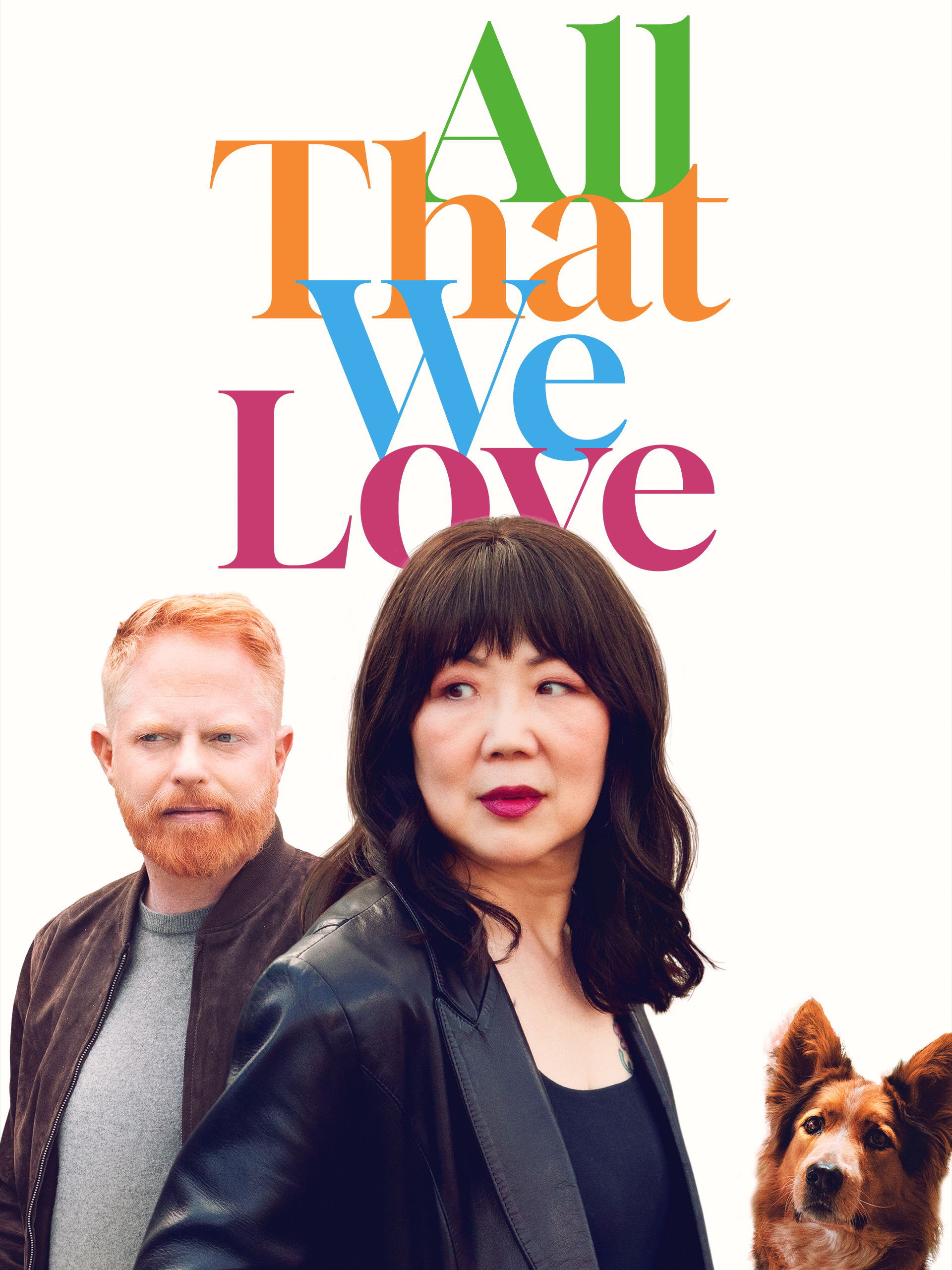
But he was insistent on moving beyond grief over the loss of a loved one. “You still have to do everything else after that, and you have to interact with people, with your friends and family.”
The difficult Buddhist notion of non-attachment, of letting go becomes a necessary underpinning of Emma’s story. As the film unfolds, we learn that the death of her dog, also named Tanner, is just her most recent loss. Her husband Andy had abandoned her years before, and soon she will discover that her daughter Maggie is set on moving to Australia with her boyfriend. Even Emma’s longtime friend, Stan, is sometimes on the verge of ending their friendship because of her words or actions. Her ability to let go will be severely tested throughout the film.
To deal with his own loss, Tan wrote a first draft of a script featuring a man who loses his beloved pet. Unlike the protagonists of his four prior feature films – Happy Birthday (2002), Ciao (2008), Pit Stop (2013), and 1985 (2018) – this main character would not be gay.
A year later he contacted longtime friend cinematographer/writer/director Clay Liford. “I asked him to help me iron out some things – mostly dialogue, which he was more skilled at writing.”
Facing the stone wall of narrow-minded film financing in 2014, Yen Tan knew that his cast would have to be White. So, then began a roller coaster ride of certain actors being attached to the project and financing being found, followed by financing being dropped and actors falling away. Up and down. Yes and No.

But then along came Crazy Rich Asians (2018) and The Farewell (2019) with their all-Asian American casts and box office success. Tan could begin to think beyond the financial restrictions of 2014. He rewrote the script with an entirely different cast of characters in mind.
Still, “even when we pivoted to an Asian American cast, the same thing happened. We got talents, we lost talents, it was yes and no all over again.” Another derailment of the roller coaster came with COVID and the lockdown.
Tirelessly, Yen Tan’s persistence finally triumphed when he secured Margaret Cho to play the principal character, Emma, with the help of longtime friends. Ryan Harper Gray, an actor whom Tan had known from the Dallas film community, had moved to Los Angeles and eventually married stand-up comedian Atsuko Okatsuka. “She was very instrumental in helping us get Margaret because Margaret was like her mentor.” Although the script could not be given directly to Cho, Okatsuka let her know that it was being submitted to her reps and that she “should take a look at it.” After reading it quickly, Margaret Cho showed definite interest. Yen sealed the deal when he talked with her backstage at Cap City Comedy Club in Austin.
Kelly Williams and Jonathan Duffy (Ten Acre Films), who produced Tan’s Pit Stop (2013), were on board as producers of All That We Love from the very beginning.
Because of their previous production work on Light from Light (2019) for Ley Line Entertainment, Williams and Duffy were able to bring that company in to produce All That We Love. Ley Line’s association with the Oscar-sweeping Everything Everywhere All at Once (2022) had already proved their support for Asian American films.
A newer company, Unapologetic Projects, also joined the project. Yen explains, “They started off with a bang because one of the first films that they produced was called Didi (2024), and that was also an Asian American film that premiered at Sundance last year.”
With production funds in place by the spring of 2023, Yen Tan left Texas to film in California where he could finally pursue a long-held dream: “I was very intentional in working with a predominantly Asian American cast and crew on an Asian American film. I wanted to explore what we could achieve creatively through that shared experience.” That would become a reality both in front of and behind the camera.
He soon discovered that working with such a cast and crew provided results that didn’t even have to be prompted: “A lot of it was subconscious. It’s not like we always have to talk about how to depict the lives of Asian Americans. So much of it was subtle.”
Not because she had helped secure Margaret Cho, but because she was a perfect choice, Tan offered the role of Emma’s sister-in-law, Raven “Ravenous” Liu, to Okatsuka. Despite the ugly abandonment and divorce, she and Emma had remained friends. Okatsuka’s excellent comic talents are showcased with her character’s wildly successful mukbang show on YouTube. Yen Tan explains:
“They’re videos of people stuffing their faces and talking at the same time. I think it has an ASMR effect on some viewers, where they’re soothed and satisfied by watching people eating, without feeling their urge to eat. Some of them have racked up so many followers and are so popular that they are making millions of dollars.”
Working with casting director Charlene Lee, Yen Tan was able to assemble the rest of the stellar cast, including Kenneth Choi (9-1-1) to play the estranged husband Andy and Jesse Tyler Ferguson (Modern Family) as Emma’s gay longtime friend Stan. Alice Lee (Zoey’s Extraordinary Playlist) was chosen to play Emma’s daughter, Maggie.
With the story set in the Los Angeles area, the director was excited to explore both the diverse living spaces and the natural beauty of Southern California. A number of significant scenes take place in various hillside parks surrounding the city.

Tan elaborates: “Between my conversation with producers and with Jon Keng (the cinematographer), we didn’t want to just always shoot interior scenes, because it just makes the film feel smaller. We’re making a character-driven film, and if you keep having people just talking inside a room, then it feels monotonous. And part of it was also we’re in L.A., and there are many beautiful exteriors.”
As far as the characters’ living spaces, location scouts and production designer Angelique Clark (Broad City, The Sex Lives of College Girls) worked on existing spaces rather than creating sets.
Yen Tan provides details: “Angelique has done a lot of television. She has a really great sense of style and knows how to work with a tight budget. She had a really great team that I adored. We went through a character breakdown in terms of what are the living spaces like for each role and how should it reflect who they are. Angelique always reminded me that we need locations where a lot of the bones are in place. It should have certain elements there already so that she and her team could just come in and add or eliminate.”
Once Maggie is definitely set on moving to Australia, her friends throw a going-away party in a home outside of Los Angeles, far enough away that Stan and Emma stay in a hotel where their fractured friendship might have a chance to heal. Tan learned a lot about filming in California because of the choice of home for that scene:
“We looked at a bunch of different homes that have a very nice, expansive bungalow feeling. The one we found also has a nice pool in the yard. But there was also the reality of whether we can afford this location. And is it available on the night that we can shoot? L.A. is really complicated when it comes to locations because different neighborhoods have different restrictions. There was a whole gamut of rules that was very foreign to me as I wasn’t used to dealing with this in Texas.”

Costume designer Amanda Wing Yee Lee worked on clothing the characters. Looking at their existing wardrobe and mixing in other selections, she curated the appropriate look for each one.
Yen Tan made a very wise choice in his cinematographer, Jon Keng, originally from Singapore, a graduate of the American Film Institute Conservatory and busy as a cinematographer since 2011.
Working with Keng, Yen Tan was able to see his imagination turn into real images that looked just the way he hoped: “Jon has a very good eye. His color palette always felt very warm and human, and retains an analog quality, even though we shot it digitally. I’m not a fan of a very sharp high-definition look. I would ask him to just think about softening things and not make it look so detailed.”
Furthermore, Tan wanted the film to convey a “California feeling.” Jon was able to deliver that indefinable, yet recognizable look: “Jon has lived in L.A. for a while and knows different parts of the city well. And what the light there looks like. When you watch it, the cinematography has a very warm and fuzzy feeling. That was something I may have conveyed to him indirectly, but he managed to interpret what I was looking for.”
I’m always intrigued by the many ways that directors work with actors, both seasoned ones and newbies. So, I inevitably asked Yen about his directing style with his very experienced Hollywood cast.
First off, there was no time for rehearsals days or weeks before filming. “Everyone’s schedule was all over the place. By the time they came onto set, we immediately figured out the blocking and technically we did our rehearsals at that point. We began shooting after that.”
From the beginning, Yen Tan wanted this film to combine comedy with drama. He admits to using humor “to cope with a lot of things, including tragedy and loss.” But his previous films have been more dramatic, with little or no comedy. So, for All That We Love he easily states, “I am still learning how to work with comedy, which is much harder than drama. In the case of working with seasoned comedians like Margaret and Jesse, I always lean on them to make things funnier.” Consequently, in one of their scenes emphasizing snarky, biting humor with gay undertones, the two actors let loose with unrehearsed improvisations that satisfied the director even more than what he had written.
On the other hand, dramatic scenes of separation or reconciliation were performed just as Yen Tan had originally written.
When he didn’t feel that a particular scene was working just right, Tan never hesitated to express his uncertainty: “I know what I’m looking for, but I’m always willing to say, ‘Oh, I don’t know if this is working.’ I try to have these conversations with my producers or with Jon Keng. It’s a way to talk through it and hear their thoughts: ‘Can we make this better? Can we make this work somehow?’”
Then there were those scenes when all fell into place, perfectly merging Tan’s words with the actors’ interpretations. For example, in Kenneth Choi’s most emotional scene when there is a glimmer of hope in being reconciled with the daughter he hurt so badly, Tan remembers: “Kenneth had to carry most of the scene’s emotional weight. I think he really put himself through the ringer as an actor because I felt like he was very much trying to be in the headspace of the character. I could tell the multiple takes really took it out of him. He did such a marvelous job with those scenes. And I think it really helped both Margaret and Alice to get into the same head space as him, because he was so much deeper in it before we even started shooting. It really got everyone in the same mood.”

With filming completed at the end of May 2023, Yen Tan then turned to a Taiwanese American editor with whom he had never worked before, Yang Hua Hu. With an MFA from USC, Yang Hua Hu had become a kind of disciple of Richard Chew, the well respected Chinese American editor of such films as Star Wars: Episode IV – A New Hope (1977), for which he won an Oscar, Coppola’s The Conversation (1974), One Flew Over the Cuckoo’s Nest (1975), and Risky Business (1983).
One Sundance film which Yang Hua Hu had edited, Mass (2021), really impressed Yen Tan: “The whole film is basically a long conversation. It has a play-like quality, but the whole film is edited so well that I never felt like I was just watching a conversation for 90 minutes. The performances were extraordinary. The way Yang Hua shaped all the footage made you feel like you’re very much in the thick of it. And you forget that it’s just four people sitting in a room talking to each other.”
After receiving a wide range of suggestions and notes from a lot of people and going through test screenings of work-in-progress, working with the editor on the final version eventually proved to be a really good experience for Tan over a two-month period: “You’re sitting down with your editor and you’re just going through all these details, talking through every one of them and figuring out what are the notes that you should be taking and what are the ones you should be ignoring. It put me in a much more vulnerable space than the other films. I think Yang Hua was great in that he was always the person I can look to who was going to be my rock throughout the process.”
For the music, Yen already had songs in mind for the scene in the gay bar, a microcosm containing the film’s principal themes of loss and separation, but not yet reconciliation.
“Easy,” a plea against separation by gay musical icon Troye Sivan, is karaoke-tortured by Stan and Maggie. Accompanied by a member of Stan’s newly initiated 3-way relationship, Emma sweetly sings the Cher and Peter Cetera duet, “After All,” a song about reconciliation.
Trina Marie Hill, music supervisor, came to the rescue by securing rights to these two songs, the exact ones that Yen had wanted – not an easy feat for an independent film. Tan explains that the cost, while not cheap, was “not as severe if you’re not using the actual cues, since we’re just obtaining the rights for karaoke cues of these songs.”
These two musical selections were very significant in what they represented: “That whole sequence essentially is trying to depict where the main characters are in terms of their past and their present. So, Stan and Maggie open the scene, singing “Easy,” which is a contemporary song. And then Emma sings an 80s song from her past that reminds her of her ex. The song is essentially about how we’re still meant to be together despite everything. Meanwhile her daughter and her best friend are very much about getting on with things and looking forward to what’s ahead while Emma’s stuck in nostalgia.”
Later, Stan and Emma’s reconciliation is tenderly presented in a scene accompanied by an Austin-related song, Daniel Johnston’s “Your Love Will Find You in the End.”
Outside of these specific musical selections so important to Yen Tan, the director secured the talent of Jon Natchez, a member of the Grammy Award-winning rock band The War on Drugs. He had previously composed music for various films. The producers of All That We Love had worked with him before. Once again, Yen Tan had a specific desire: “[Natchez] and I got into a conversation about a score that has a California vibe. I couldn’t really articulate what that is. I was thinking in terms of guitars and The Beach Boys. And he was able to take what I said and ran with it and gave me a bunch of different instruments to listen to just to see how I respond to them. And then from that, he was able to craft this sound that to me felt very much like an LA sound. But again, it’s very subtle.”

I found my conversation with Yen to be very delightful and enlightening. I first saw and loved All That We Love at Hanna Huang’s always fascinating Austin Asian American Film Festival earlier this year at the Austin Film Society Cinema. I have subsequently watched it two more times and still get choked up with emotion during various scenes. Anyone familiar only with Margaret Cho’s stand-up comedy appearances may be surprised by her excellent performance in a serious role (fortunately tinged with biting humor at inappropriate times). The entire cast is excellent as they carry us through a range of emotions while allowing us to laugh just when we thought we couldn’t or shouldn’t.
Ultimately, I think that All That We Love will be an enduring classic because of Yen Tan’s deep understanding of human beings and our coping mechanisms when confronted with loss. He mainly accomplishes this through words and the actions of his characters, but just as he began his film with the sweet departure of a beloved dog, Yen Tan brilliantly ends it visually – with the final departure of Tanner’s lingering spirit. In the final shot the dog is letting us know that “It’s OK. Go get your ball.” Emma (and anyone else who is ready) can let go, get on back out there, live life, make new friends, open their hearts and minds, and experience love once more.
Vertical released ALL THAT WE LOVE in select theaters on November 7. It is now available as VOD on Prime, Apple TV, and Fandango at Home.
