



There are films that rely on dialogue to explain themselves, and there are films that trust images, movement, and emotion to communicate something universal. Flow belongs to the latter category. Quiet yet powerful, simple in its premise yet profound in its emotional impact, Flow is one of those rare animated features that reminds us how much can be said without a single spoken word.
The story follows a solitary cat navigating a world transformed by an overwhelming flood. Forced from the familiarity of its home, the cat finds refuge aboard a drifting boat occupied by an unlikely group of animals. Together, they journey through breathtaking landscapes where remnants of civilization coexist with the relentless beauty of nature. Survival becomes a shared responsibility, requiring trust among creatures whose instincts might otherwise keep them apart.
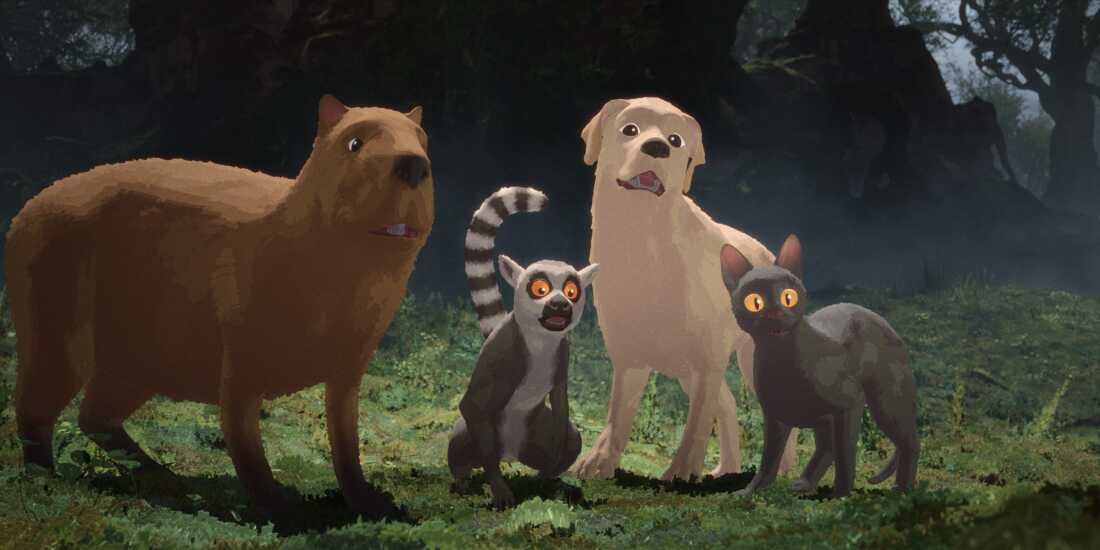
What struck me most about Flow was its extraordinary confidence in visual storytelling. In an era when many animated films depend heavily on rapid-fire dialogue and pop culture references, this film moves in another direction entirely. It asks audiences to observe rather than simply consume. We watch the cautious curiosity of the cat, the shifting dynamics among the animals, and the gradual development of companionship born out of necessity.
The absence of human characters is not merely a stylistic choice; it is central to the film’s emotional power. By placing animals at the heart of the narrative and allowing them to behave according to their own rhythms and instincts, Flow invites viewers to project their own fears, hopes, and vulnerabilities onto the story. The result is a deeply personal experience that transcends language, nationality, and age.
Visually, the film possesses an almost dreamlike quality. Water is ever-present—not only as a force of destruction but also as a symbol of change and renewal. The environments feel simultaneously realistic and otherworldly, capturing the unsettling sensation of existing in a world where familiar structures have lost their meaning. Yet within this uncertainty, moments of tenderness emerge: a shared glance, an act of sacrifice, a gesture of trust.
As someone who has spent years following developments in international animation, I find it particularly encouraging when films challenge assumptions about what family entertainment should look like. Flow does not provide easy answers or clearly defined villains. Instead, it presents coexistence as an ongoing process—messy, fragile, and essential. The animals aboard the boat are different in temperament and instinct, but survival depends upon their willingness to adapt to one another.

Beneath its adventure narrative lies a thoughtful reflection on our relationship with the natural world. The flood itself remains unexplained. There are no speeches about responsibility or environmental stewardship. Yet the imagery encourages contemplation about humanity’s place within larger ecological systems and the consequences of disruption. The film trusts its audience to arrive at their own interpretations.
The cat at the center of the story is an especially memorable protagonist precisely because it remains recognizably feline throughout the film. Its hesitations, independence, curiosity, and occasional reluctance to connect feel authentic. Watching this character slowly discover the value of companionship becomes one of the film’s most rewarding emotional arcs.
Animation has long demonstrated its capacity for spectacle and humor. What Flow illustrates so beautifully is its capacity for stillness. It understands that silence can be expressive and that emotion often resides in the smallest of moments. The film allows audiences to breathe, reflect, and engage with the story at their own pace.
Its Academy Award recognition serves as an important reminder that animation thrives through diversity of voice and approach. Great animated cinema is not defined by budget, celebrity casting, or familiarity of formula. Sometimes, it emerges from a filmmaker’s willingness to embrace simplicity and trust the intelligence of the audience.
Flow is a gentle yet unforgettable experience—a meditation on resilience, empathy, and the unexpected communities we build in times of uncertainty. Like the water that carries its characters forward, the film moves with grace and quiet determination, leaving behind an emotional resonance that lingers long after the journey has ended.
