



Hammad Zaidi, a Pakistani-American filmmaker, has built a career that moves easily between filmmaking, distribution, festivals, streaming, education, technology, and sports. He founded The Lonely Seal Company Group, which includes Lonely Seal Releasing, The Lonely Seal International Film, Screenplay, and Music Festival, The Lonely Seal Impact Fund, Lonely Seal Streaming, Film Bite, and The Story Oasis Fund. Hammad also joined the Board of Directors of Cinema Without Borders and is an Advisory Council Member of MELM – The Masters in Entertainment Leadership and Management at Loyola Marymount University (LMU).
An award-winning creator, Zaidi is a member of the Producers Guild of America and previously served as a member of the Writers Guild of America’s Video Game Caucus. His work has included producing and writing filmed content, executive-producing 29 video games, more than 200 episodes of the podcast Limping On Cloud 9, and writing more than 300 installments of Going Bionic, his column devoted to film distribution and career strategy.

His involvement with film festivals goes back decades. He has worked as a jury member, filmmaker advisor, curator, panelist, advisory board member, and world-cinema screener at festivals including Sundance, SXSW, and Slamdance. He has also taught, lectured, or participated in panels at UCLA, USC, Vanderbilt, Chapman, Avila, San Diego State, the University of Kansas, the University of Missouri, Watkins Film School, and numerous other institutions. Zaidi received his MFA from the UCLA School of Theater, Film and Television in 1994.
But lists of accomplishments rarely explain what drives someone. When I spoke with Hammad, I was interested less in the titles attached to his name than in the road that had taken him there. Very quickly, I discovered that the story of Lonely Seal itself reached much farther back than I had imagined.
Hammad took me back to his childhood in the 1970s. He remembered watching a documentary about harp seals being clubbed. Nearly all of them were killed, except one animal the film identified as “the lonely seal.”

The image never left him. There was another connection. In those years, he explained, record labels were sometimes referred to as seals. Hammad loved music as much as movies, and when he was about ten years old, he was already imagining himself owning a record company. He joked that he would call it Lonely Seal because he had no rock-and-roll bands signed yet—so he himself would be a lonely record seal.
It was the kind of childhood idea that could easily have disappeared with time. Instead, Hammad carried the name through film school and adulthood. When he finally launched Lonely Seal Releasing in 2005, he gave his company the name he had carried with him since childhood.
Today, Lonely Seal has expanded far beyond that original distribution company. Hammad described a group that includes Lonely Seal Releasing, functioning as a boutique distributor and international sales company, and the Lonely Seal International Film, Screenplay, and Music Festival, held annually in the Boston area.

He is also developing new productions, including feature films he hopes will move toward production in 2027. But one of the projects he is most excited about is Lonely Seal Streaming. That service reveals something important about Hammad’s philosophy. He knows there is no point in trying to become another Netflix, Amazon, or Apple. He respects those companies and uses their services himself. His ambition is different.
He wants to go where the larger platforms do not always go. Lonely Seal Streaming is being built around international stories, work created by women, minority voices, and stories involving people with disabilities. Hammad believes there are filmmakers producing extraordinary work who may never easily find space on the world’s largest platforms. He wants Lonely Seal to become a home for some of those voices. When Hammad began talking about disability, the conversation became considerably more personal.
He raised his left hand as he spoke and explained that when he was only six or seven months old, in Lahore, Pakistan, he suffered a head injury. The injury left him with paralysis affecting his left hand and a permanent limp. Then he said something I did not expect. He called it one of the greatest things that ever happened to him.
He did not say this to minimize what happened. Quite the opposite. He explained that living with his disability had helped shape the person he became. It was also one of the reasons his family brought him to the United States when he was about a year old, seeking better medical care.
There was no self-pity in the way he told me the story. He spoke about his disability as an inseparable part of his identity, and as one reason he feels such a strong responsibility to give disabled characters and filmmakers greater visibility.
That, I realized, explains much of what Lonely Seal Streaming is intended to be. Its emphasis is not simply a marketing strategy. For Hammad, it comes from lived experience. Our conversation naturally moved from disability to another subject close to both of us: international cinema. Hammad becomes particularly animated when speaking about filmmakers outside the traditional centers of American filmmaking. “I want international voices. I want unique voices,” was essentially the heart of what he told me.
He finds it amusing when an international series suddenly becomes a phenomenon on a major American streaming service, and people behave as though the discovery of great filmmaking in Korea, Iran, South Asia, or elsewhere is some sort of miracle. For Hammad, there is nothing surprising about it. The talent was always there.
He told me proudly that the Lonely Seal festival has regularly screened Iranian films, precisely because he has found the level of filmmaking so consistently strong. He also spoke about serious dramatic filmmaking from South Asia and the extraordinary dedication to craft he sees there.

Hammad grew up in America and loves American cinema, but that has never prevented him from looking beyond Hollywood. In fact, his enthusiasm for international filmmaking seems to come partly from the realization that remarkable stories can emerge from almost anywhere. His goal is simply to help put a spotlight on them. That inevitably led me to ask him how he sees Hollywood today. His answer was immediate: too many sequels.
For Hammad, one of the central problems facing contemporary Hollywood has been its dependence on familiar properties and endlessly recycled ideas. He hopes the pendulum will eventually swing back toward genuinely original screenwriting. To make his point, he mentioned Forrest Gump. A film that unusual, he argued, might have tremendous difficulty being approved by today’s studio system.
What he wants is not the disappearance of commercial cinema but the return of risk— the willingness to give writers the opportunity to create something audiences have not already seen several times before. Listening to him, I began to understand that this belief in originality connects almost everything he does. His frustration with Hollywood sequels, his interest in international
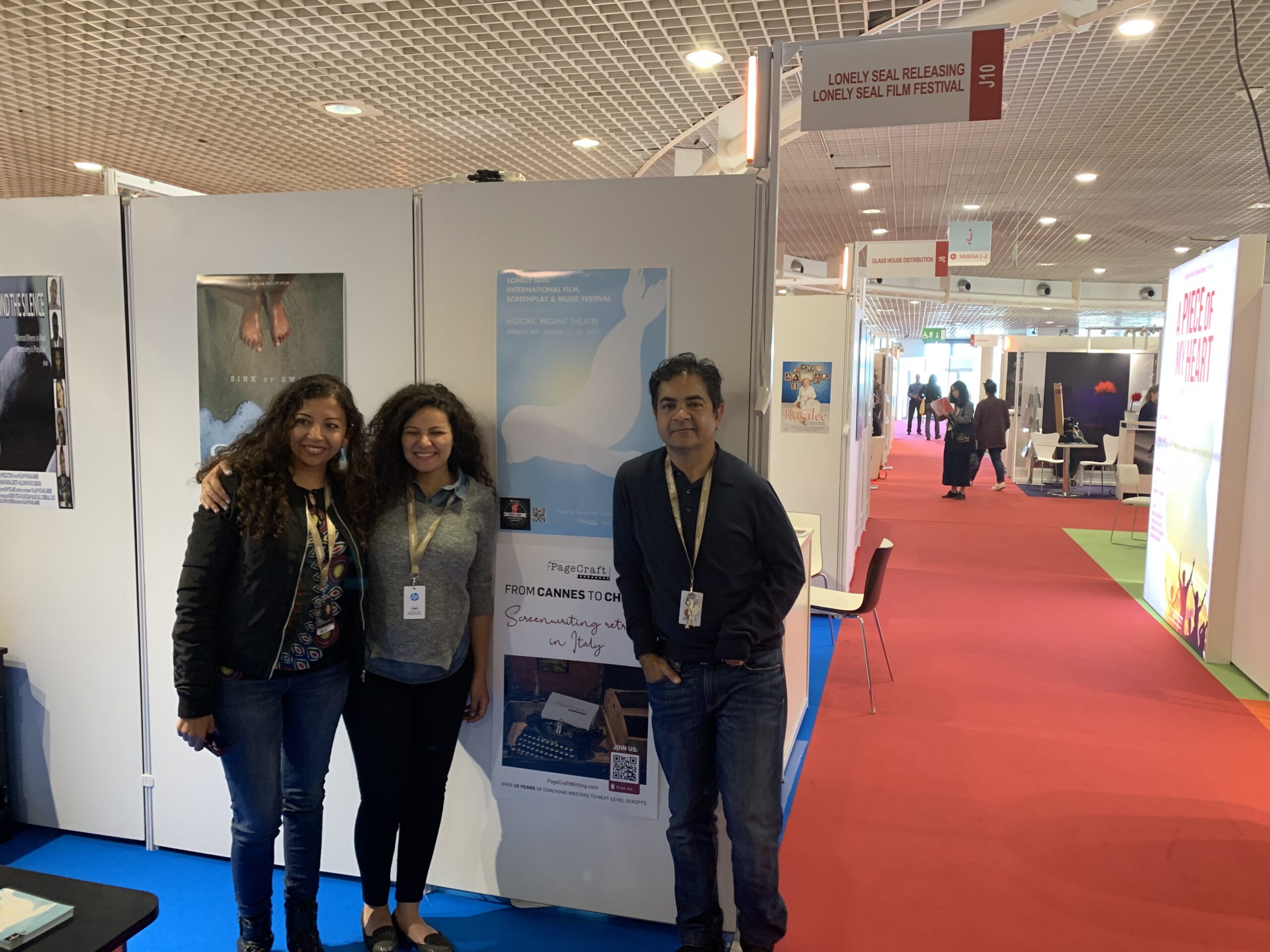
filmmakers, his support for disabled characters, and his film festival all come back to the same fundamental idea: finding stories that have not already been exhausted. That philosophy became even clearer when we discussed the Lonely Seal International Film, Screenplay and Music Festival. Hammad did not simply wake up one morning and decide that owning a festival sounded interesting. His relationship with festivals goes back nearly three decades.
He began judging festivals in 1997 at Flickerfest in Sydney, Australia, returning again the following year. He later became involved with Slamdance, including creating a screenwriting competition associated with the festival. He sponsored South by Southwest for several years and served as a filmmaker advisor there in 2009. He was a world-cinema screener at Sundance in 2005 and spent years supporting and advising other festivals.
By the time he created his own festival in 2018, it was not the beginning of his festival experience but the culmination of decades spent observing how festivals work—and perhaps equally importantly, how they sometimes fail filmmakers. The Lonely Seal festival eventually became, in his mind, the foundation for what he now wants to accomplish through streaming.
The festival has presented films from many countries, sometimes representing more than twenty countries in a single edition. But nationality, genre, and running time are secondary for Hammad. There is one sentence he uses to describe what he is searching for: “Stories aching to be told.” That may be the simplest explanation of his entire philosophy.
A narrative feature, a documentary, a short, a film from Iran, Pakistan, Europe, America, or somewhere completely unexpected—it makes little difference to him if the story has that urgency. Hammad is, before anything else, a story person. There is yet another side to his professional life that at first seems far removed from independent cinema: sports.
Hammad is a co-founder of the Ryz Sports Network with veteran sports executive Neil Brubaker. The network expanded remarkably quickly. Hammad described a live channel distributed across major streaming and television platforms, including Samsung TV Plus, Amazon, Roku, LG, Vizio, Comcast, DirecTV, Fubo, and others. What interested me was how he connected the sports network’s success back to cinema.
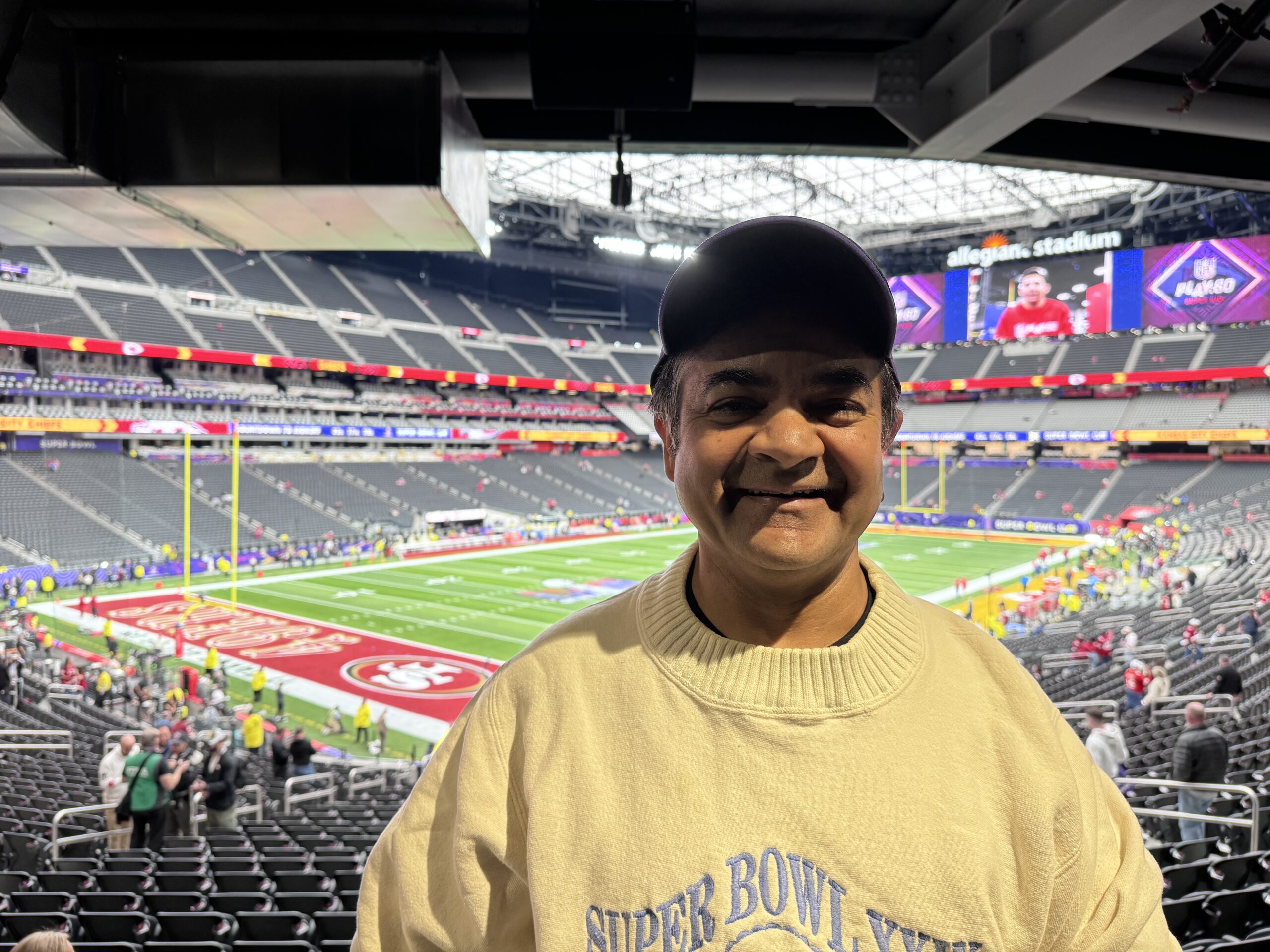
Sports and movies may appear to occupy different universes, but for Hammad they provide complementary lessons about distribution, audiences, technology, and access. The rapid expansion of Rise has given him experience and relationships that he hopes can eventually help Lonely Seal Streaming find viewers as well.
He is realistic enough to know that sports has advantages cinema does not. Live sports can attract enormous audiences, and he does not assume every platform carrying the sports channel will automatically embrace a movie service. But the success gave him confidence that independent networks can still build significant distribution if they understand where audiences are going.
And through all these different ventures—movies, festivals, streaming, podcasts, technology, sports—I kept returning to that child watching the documentary about a lonely harp seal. There is something almost cinematic about the connection.
A childhood image became the name of an imaginary record company. The imaginary company survived long enough to become a real film distributor. The distributor eventually became a festival. The festival began to open its doors to films from around the world. And now that idea is evolving again into a streaming platform intended to create space for filmmakers and characters who too often remain outside the mainstream. Perhaps that explains Hammad Zaidi better than the long list of companies and accomplishments I began with. He is interested in what has not yet found its place. The filmmaker without distribution. The international story waiting to cross a border. The disabled character rarely placed at the center of a film. The writer with an original idea in an industry increasingly dependent on repetition.
During our conversation, Hammad repeatedly returned to voices that deserve to be heard. By the end, I understood that when he talks about finding “stories aching to be told,” he is not merely describing the programming philosophy of a festival or streaming service. He is describing the journey that has shaped his own life.
